

Oscar Lebeck – Artist in Residence
Der Fokus von Oscar Lebecks Arbeit im Salzamt in Linz, war die kritische Auseinandersetzung mit NS-Tatorten in Oberösterreich. Im Zentrum seiner Arbeit stand die Frage, wie materielle Überreste als Form des Erinnerns wirken können. Welche Möglichkeiten eröffnet eine künstlerische Aneignung dieser Relikte?
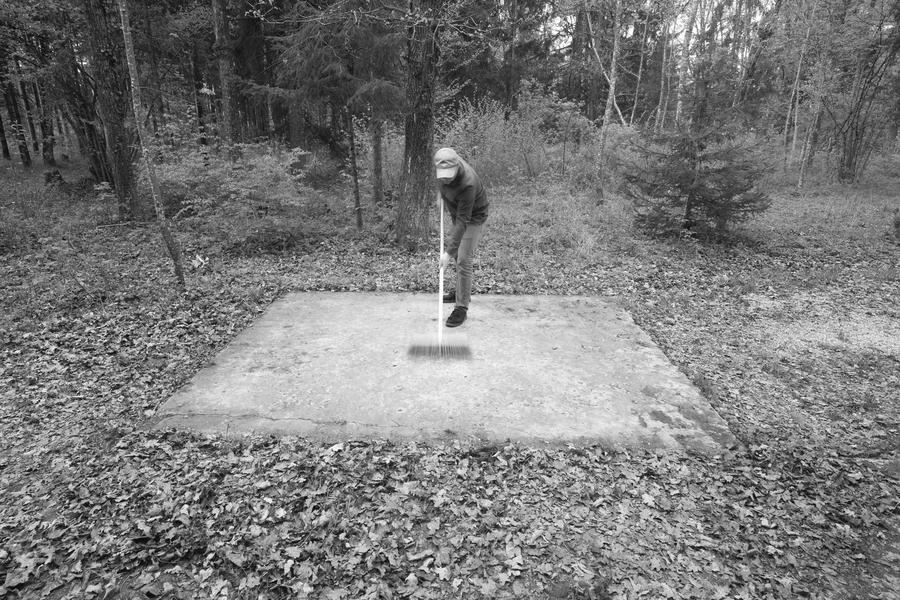
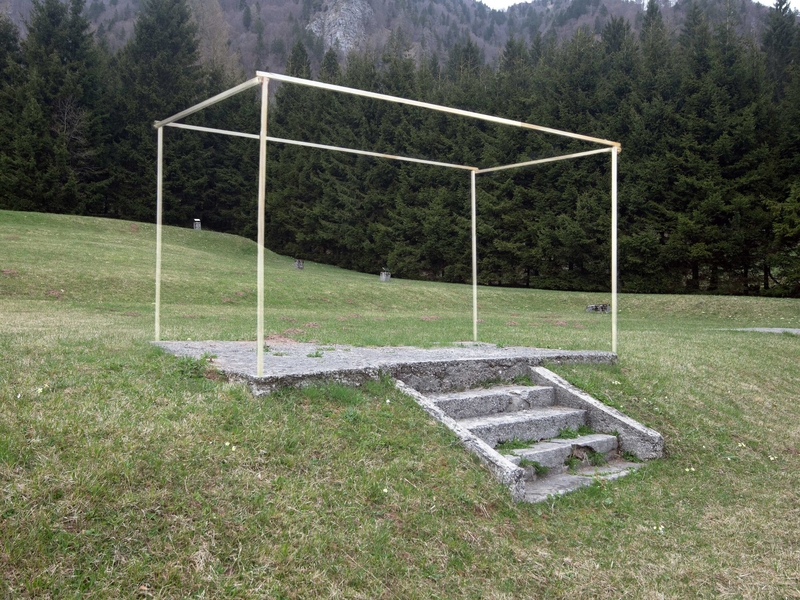
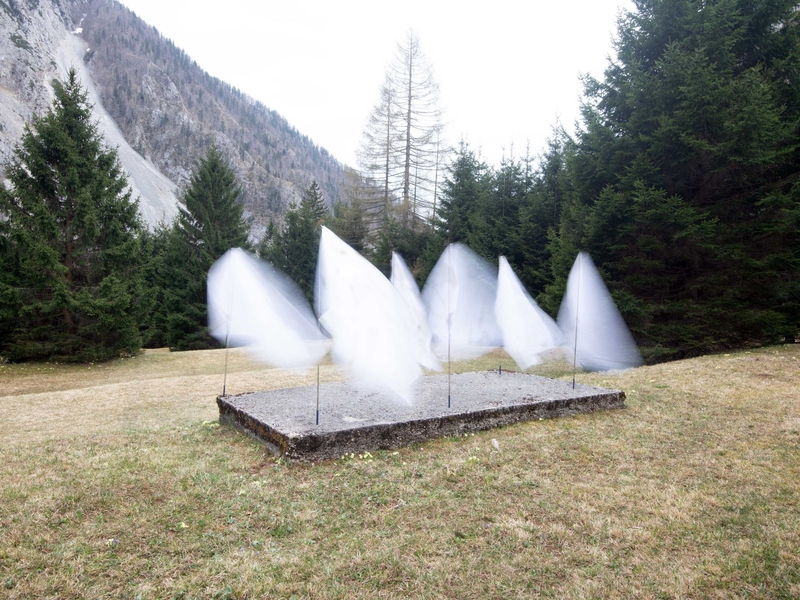
Ausgangspunkt war die fotografische Beschäftigung mit den baulichen Hinterlassenschaften des KZ Mauthausen und des ehemaligen Außenlagers Gunskirchen. Die im April 2026 entstandene Fotoserie untersucht, wie Orte durch Markierungen und Eingriffe als Erinnerungsräume erfahrbar werden.
So interpretiert der Künstler sein eigenes Werk.
Meine Arbeit versteht Erinnerung nicht als statisches Denkmal, sondern als fortlaufenden Prozess zwischen Geschichte, Landschaft und Gegenwart. Dabei interessieren mich insbesondere natürliche Veränderungsprozesse und die Frage, wie viel Erhaltung notwendig ist, um historische Bedeutung sichtbar zu machen. Ich verstehe Vegetation, Verfall und Überlagerungen nicht als Verlust, sondern als Teil einer Erinnerungslandschaft.
Meine künstlerische Handlung, etwa das Freilegen oder Kehren von Flächen, ist eine Form der Befragung des Ortes: Was wird sichtbar, wenn wir eingreifen, und was verschwindet durch Ordnung und Rekonstruktion? Bedeutung entsteht erst im Zusammenspiel von Spur, Kontext, körperlicher Arbeit und medialer Rahmung. Ziel meiner Arbeit ist es, abstrakte historische Zusammenhänge in eine konkrete räumliche und visuelle Erfahrung zu übersetzen.
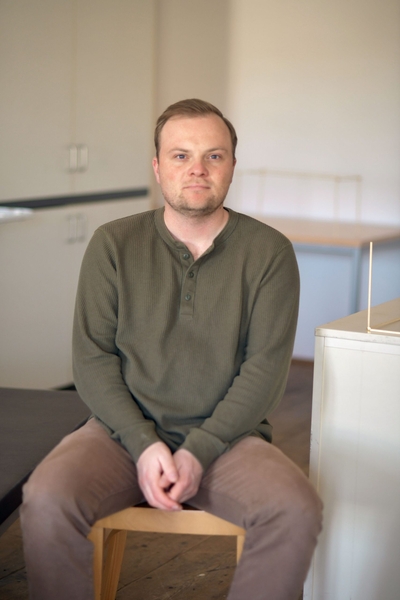
Fotos: Oscar Lebeck
English version:
Oscar Lebeck’s work at the Salzamt in Linz focused on critically engaging with sites of Nazi crimes in Upper Austria. At the heart of his project was the question of how remnants of material can serve as a form of remembrance. What possibilities does an artistic approach to these relics open up?
The starting point was a photographic exploration of the architectural remains of the Mauthausen concentration camp and the former subcamp Gunskirchen. The photo series, created in April 2026, examines how places become spaces of memory through markings and interventions.
This is how the artist interprets his own work
My work does not see remembrance as a static monument, but as an ongoing process between history, landscape, and the present. I am particularly interested in natural processes of change and the question of how much preservation is necessary to make historical significance visible. I regard vegetation, decay, and overlapping layers not as loss, but as part of a landscape of memory.
My artistic actions, such as uncovering or sweeping surfaces, are a way of questioning the site: What becomes visible when we intervene, and what disappears through order and reconstruction? Meaning only emerges through the interplay of traces, context, physical labor, and the framing of the medium. The aim of my work is to translate abstract historical connections into a specific spatial and visual experience.